TORN
- 4.4
- Rating
- 1.00M
- Installs
- Free
- Price

 Analysis by App-foxy
I went into TORN expecting a quick crime-themed role-playing game and found something much more patient. This is a text-driven online world where progress depends less on flashy presentation and more on the choices I make, the risks I accept, and the way I plan several steps ahead. Its setting revolves around crime, money, rivalry, and clans, but the real appeal is the feeling that small decisions can shape the direction of a long-running character.
That makes it a very different experience from a typical mobile RPG. There are no elaborate battles carrying the entire game, no constant stream of visual spectacle, and no obvious finish line. Instead, I spend time weighing whether an action is worth the possible setback, deciding where limited attention should go, and learning how the wider community affects my plans. It is free to play, but it is aimed at adults, with a Mature 17+ rating and optional purchases ranging from $1.49 to $194.99 per item.
Where the real decisions begin
The first thing I noticed is that the text-based format changes how I read the game. In a conventional role-playing title, the interface usually tells me what matters through animations, map markers, and dramatic effects. Here, the words carry more responsibility. I have to pay attention to descriptions, outcomes, timing, and the consequences of choosing one activity over another. That slower rhythm can seem plain at first, but it gives decisions more room to breathe.
You May Also Like

 Blood Strike: 2.5 Anniversary
Blood Strike’s Loadouts Turn Every Drop Into a Tactical Gamble
A close look at Blood Strike’s custom loadouts: how fast access to signature weapons reshapes its battle royale rhythm, rewards preparation, and narrows the gap between fights.

 Pandora - Music & Podcasts
Pandora’s Music Is Easy to Start, but Harder to Recover
Pandora’s strength is its low-effort path from a seed to a station. Its weak spot is how much confidence it asks you to place in connection, setup, and quiet recovery.

 8 Ball Pool
 Is Built on Rivalries, Rematches, and Routine
A close look at the rivalries, rematches, shared routines, and unanswered safety questions that turn a quick pool match into a persistent mobile community.

 Samsung Music
’s Quiet Strength Is Playing What You Already Own
Its reach comes less from spectacle than from dependable access to a personal library. That simplicity is both the app’s strongest retention engine and its ceiling.

 AccuWeather: Weather Radar
AccuWeather Review: A Quick, Clear Forecast for Everyday Decisions
For everyday plans, the best forecast is the one you can understand quickly. AccuWeather makes rain timing, radar, and local conditions easy to act on, with a few trade-offs.

 Hill Climb Racing
Why Hill Climb Racing Still Turns Crashes Into One More Run
A tiny car, a bumpy hill and one more upgrade: Hill Climb Racing keeps resurfacing because its simple chaos makes every near-miss feel personal.
More From Our News Desk



TORN is built around a persistent online environment rather than a short campaign. I am not simply moving through a fixed sequence of missions and watching the story unfold. I am establishing a position inside a living community, which means other players, clans, rivalries, and changing priorities matter. The most useful question is often not “What can I do right now?” but “What will this choice leave me able to do later?”
That planning horizon is the game’s defining strength. A rushed action may offer immediate progress while creating a less convenient next step. A quieter choice may not feel rewarding at once, yet it can support a more reliable routine. I found myself thinking in terms of daily habits rather than isolated turns: what to work toward, when to take a chance, and when to protect the progress already made.
This is also why I would not recommend it to someone looking for a visually rich, fast-moving mobile adventure. The presentation is deliberately restrained, and the pleasure comes from managing a character within a complicated social and economic setting. If the idea of reading, comparing options, and checking back on a long-term plan sounds satisfying, the format becomes surprisingly absorbing. If it sounds like work, the game may feel slow before its depth has a chance to appear.
How I approached the early game
My most useful early adjustment was to stop treating every available option as equally important. A large online role-playing world can make a new player feel that progress requires trying everything immediately. In practice, I found it better to identify a simple direction and observe how it affected later choices. That approach reduced the feeling of being pulled around by every new possibility.
I also learned to read outcomes as information rather than judging them only as wins or losses. A setback can reveal that I misjudged timing, preparation, or the value of a particular opportunity. This is one of the less obvious strengths of a text RPG: because the game does not bury every result under spectacle, I can examine the decision itself. That makes experimentation useful, provided I am willing to accept that not every experiment pays off.
For a new player, I would keep a small personal record of goals and mistakes. It does not need to be elaborate. Noting which activities support the character I want to build, which risks were unnecessary, and which routines fit my schedule can prevent aimless play. This is especially helpful because the game’s depth is easier to appreciate when I can see a pattern in my own decisions.
Risk matters more than constant activity
The crime setting gives the game a natural tension between reward and exposure. I am encouraged to think about profitable opportunities, but the most attractive option is not automatically the smartest. A decision can be worthwhile because it advances a goal, yet still be poorly timed if it leaves me with fewer ways to respond afterward. That tension gives ordinary progress a strategic edge.
I enjoyed this more than a system where the best move is always obvious. In many mobile games, the player is pushed toward constant action, and stopping feels like wasting time. Here, patience can be part of the strategy. Sometimes the correct move is to prepare, preserve resources, or wait for a better moment rather than chase the largest immediate reward.
That does not mean every risk feels perfectly balanced. When an outcome goes against me, the slower structure can make the loss feel more significant because recovery is not always instant. Players who prefer generous checkpoints or rapid retries may find that frustrating. I think the friction is intentional, but intention does not make it comfortable for everyone.
My practical advice is to separate “interesting” from “valuable.” A risky action may be entertaining to attempt, but that does not mean it belongs in the current plan. I got better results when I asked what I would do after success and what I would do after failure. If I had no sensible answer to the second question, I usually was not ready to take the chance.
Clans change the meaning of progress
The multiplayer side is not a decoration added to a solo game. Clans and player relationships give progress a social dimension, and they can change what counts as a good decision. A personal plan may be efficient in isolation but less useful if it conflicts with the expectations or priorities of the group I belong to. Cooperation can create opportunities, while poor communication can turn a promising arrangement into unnecessary friction.
I found that this makes the game better suited to players who enjoy negotiation and shared planning. You do not have to approach every interaction as a dramatic rivalry. Sometimes the important skill is simply understanding the role you want to play within a group. A player who prefers independent progress can still enjoy the broader world, but the social layer is difficult to ignore if the goal is to engage with the game fully.
There is a trade-off here. A clan can make the experience feel more alive and give long-term goals greater meaning, but it can also make the game feel demanding. Group expectations may not match my available time, and a plan that works for one player may not suit another. I would recommend joining social structures gradually, watching how they operate before committing too much attention.
One useful habit is to define what I can reliably contribute instead of promising more than I can sustain. In a persistent game, consistency is often more valuable than a burst of enthusiasm followed by inactivity. That mindset helped me enjoy the social side without allowing it to dictate every part of my schedule.
Adapting instead of following one permanent build
Another reason the game holds attention is that progress does not feel like a single straight road. My priorities can change as I understand the setting better. I may begin by focusing on personal advancement, then become more interested in money management, social influence, or clan participation. The important point is that the game gives me room to reconsider what success means.
That flexibility also creates uncertainty for newcomers. A player may want a clear build guide that explains the correct investment at every stage. TORN is less satisfying when approached as a checklist of perfect answers. I found more value in choosing a direction, watching its results, and adjusting when the surrounding situation changed.
Adaptation is particularly important because online communities do not remain static from a player’s perspective. The people I interact with, the priorities of a clan, and my own available time can all shift. A strategy that was comfortable earlier may become inefficient later, not necessarily because it was wrong, but because the conditions around it changed.
For everyday play, I would create two kinds of goals. The first should be stable, such as improving the character in a broad direction. The second should be flexible, such as responding to a current opportunity or social need. This keeps the game from becoming either completely rigid or completely aimless. I always had something durable to work toward, while still leaving room to react.
A realistic routine for busy players
My clearest use case for TORN is the player who enjoys checking a persistent world in short, deliberate sessions. Imagine having a few spare moments during a commute, a lunch break, or the quiet part of an evening. Instead of needing a long uninterrupted play session, I can review the current situation, make a decision, and return later to see how the plan developed. The value comes from continuity rather than from finishing a large chapter in one sitting.
That routine works best when I decide in advance what I am checking for. A quick visit becomes much more useful when I have a goal, such as reviewing progress, deciding whether to pursue a risk, or checking how a clan commitment fits the day. Without that focus, a large persistent game can turn into aimless browsing.
On the other hand, players who want a complete experience in one sitting should look elsewhere. TORN asks for patience and repeated attention. Its rewards are connected to accumulation, learning, and relationships, so it may not deliver the same immediate satisfaction as a conventional mobile RPG with short battles and frequent visual rewards.
Depth that reveals itself over time
The game’s age is relevant to how I experienced it. TORN was released on May 8, 2018, and its long presence helps explain why it feels like an established online world rather than a newly introduced experiment. The current version is 2.3.37, and the game has passed one million installs. It also holds a 4.4 average from around twenty thousand ratings, with roughly 2.9 thousand written reviews, which suggests that its unusual format has found a substantial audience.
I would not use those figures as a guarantee that every player will enjoy it. Text-heavy design is inherently selective. The same restraint that lets the game focus on decision-making can feel dated or visually empty to someone accustomed to modern role-playing productions. Its appeal depends on whether I want to imagine the situation and manage it, rather than simply watch an elaborate world perform for me.
The developer, TORN LTD, has built an experience where depth comes from accumulated context. I gradually learn which choices deserve attention, which risks fit my goals, and how social connections affect the value of an action. That learning curve is not just an obstacle before the “real” game; it is a major part of the game itself.
Still, the long-term structure can make mistakes feel expensive for new players. I would avoid spending impulsively until I understood my own routine and priorities. The game is free to start, but optional in-app purchases can reach $194.99 per item, so anyone sensitive to spending should set a firm personal limit before becoming invested in progression.
The purchase range does not automatically make the experience unsuitable, but it changes how carefully I would approach it. I prefer to play long enough to decide whether the underlying loop fits me before considering optional spending. If I need purchases to make a game feel enjoyable from the beginning, that is usually a sign that the game’s natural pace is not right for me.
Who should choose it, and who should skip it
I would recommend TORN to players who enjoy persistent online worlds, text-based role-playing, economic choices, criminal themes, and social strategy. It is especially appealing if you like making a plan, seeing that plan evolve, and learning through consequences rather than being guided toward a single obvious route. Players who enjoy clan dynamics may find more depth here than in a purely solo mobile adventure.
I would skip it if my priority were cinematic graphics, rapid combat, a tightly scripted story, or an easy path from one reward to the next. It is also a poor fit if I dislike waiting, reading, revisiting decisions, or adapting to other players. A standard action RPG is better when I want immediate control and spectacle; a traditional single-player role-playing game is better when I want a carefully authored narrative with a clear ending.
The Mature 17+ rating is another reason to consider the audience carefully. The crime-focused setting is not presented as a light, family-oriented fantasy adventure. Adults who are comfortable with that tone may appreciate its sharper identity, while younger players or anyone seeking a gentler theme should choose a different role-playing game.
Device compatibility is reasonably accessible for an older Android phone, since the minimum requirement is Android 6.0. That does not tell me how every device will feel in practice, but it does make the game easier to consider if I am not using a recent handset. More important than hardware, however, is whether I enjoy the text-first interface and persistent online structure.
My strategy verdict
After spending time with it, I see TORN as a game about managing consequences rather than collecting constant stimulation. Its strongest moments come when I make a deliberate choice, accept the uncertainty around it, and later understand how that choice affected my position. The crime-and-clan setting gives those decisions a recognizable identity, while the text format leaves enough space for planning and imagination.
Its weaknesses are closely tied to its strengths. The pace can feel slow, the interface demands attention, and long-term progress may be less forgiving than casual players expect. The social layer can enrich the experience but also introduce obligations. Optional purchases require self-control, particularly because the highest listed price is substantial. These are not minor details; they determine whether the game feels thoughtful or tedious.
My best advice is to approach it as a long-term hobby, not as a quick mobile distraction. Start with modest goals, learn from outcomes, keep risky decisions purposeful, and allow your strategy to change as you understand the world. Do not judge the game solely by its first few interactions, but do not force yourself through the early experience if the text-driven format already feels like a chore.
TORN is worth trying when you want a patient, social role-playing world built around decisions, trade-offs, and delayed rewards. I would recommend it to a friend who enjoys planning more than spectacle and who is comfortable letting a character develop over time. For everyone else, especially players seeking immediate action or a self-contained story, another role-playing option will probably be a better match.
FAQs for TORN
01What is TORN?
TORN is a text-based massively multiplayer online role-playing game set in a persistent cyberpunk city. Instead of relying on detailed 3D graphics, it focuses on statistics, progression, missions, crimes, jobs, trading, combat, and interaction with other players. You create a character, develop skills, earn money, join groups, and build a reputation while competing or cooperating with a large online community.
02Is TORN free to download and play?
Yes, TORN can be played for free, although it includes optional in-game purchases and premium features. You can progress without paying, but some purchases may provide convenience, extra resources, or cosmetic and account-related benefits. Progress is generally designed to take time, so new players should expect a long-term experience rather than a game that can be completed quickly.
03Does TORN require an internet connection?
Yes, TORN requires an active internet connection because it is an online multiplayer game built around a persistent world. Your character, economy, activities, battles, and interactions take place on the game’s servers. The mobile version may be convenient for checking your account and completing actions while traveling, but it is not intended to function as a fully playable offline game.
04Is TORN suitable for new players?
TORN can be suitable for beginners, but it has a considerable amount of information to learn. The interface, statistics, menus, timers, economy, and player-driven systems may feel overwhelming at first. New players should follow the tutorials, read available guides, and consider joining an active faction or group. Patience is important because character development and financial progress happen gradually.
05What can players do in TORN?
Players can participate in many different activities, including completing missions, committing crimes, training statistics, working jobs, buying and selling items, fighting other players, joining factions, managing businesses, and taking part in a player-driven economy. The game offers considerable freedom, so there is no single required playstyle. Your choices can focus on combat, wealth, social activity, progression, or competition.
Pros
- Fast-paced battles keep matches engaging and easy to replay.
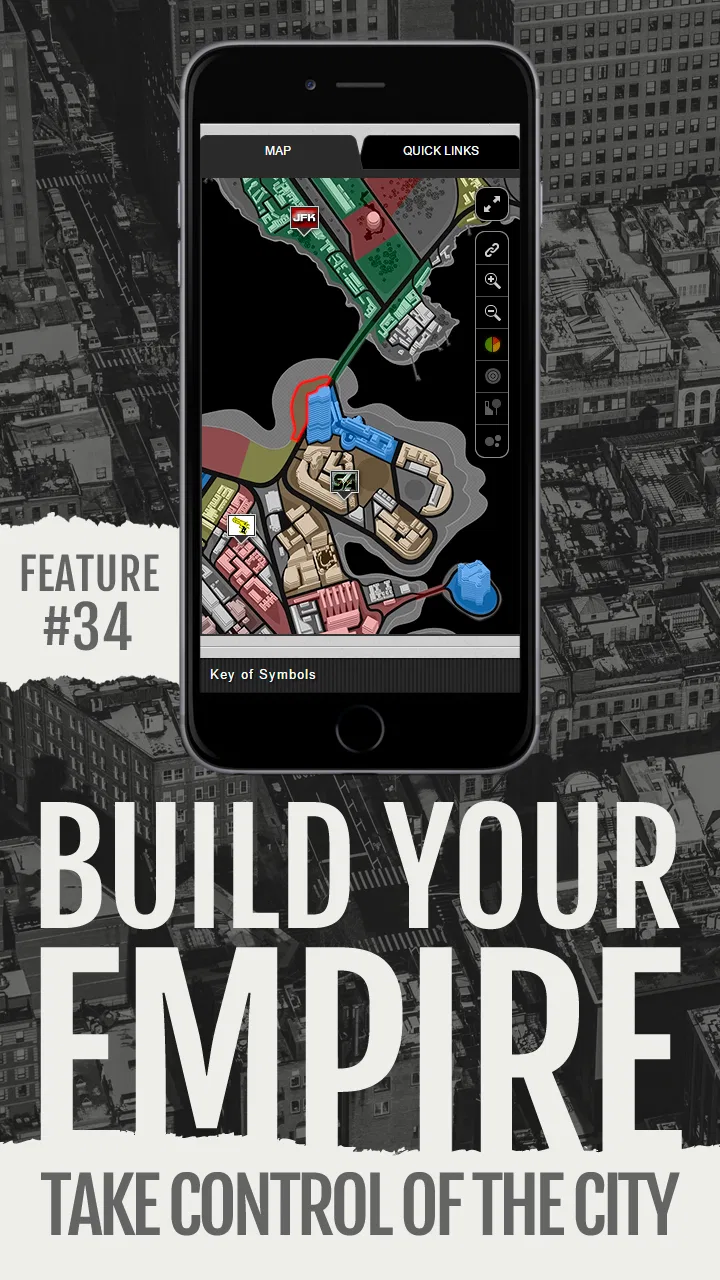
- Large city map offers plenty of areas to explore and control.
- Frequent events provide extra goals beyond the main progression.
- Character customization lets you shape your preferred play style.
- Active community adds competition through groups
- chat
- and rankings.
Cons
- Progress can feel slow without regular daily play.
- Some upgrades and resources may encourage in-app purchases.
- The interface can feel crowded for new players.
- Online-focused gameplay requires a stable internet connection.
- Long-term advancement may become repetitive after the initial stages.

TORN
Gallery